Foundation Crack Guide for Montreal Homes
Is That Crack Serious? A Structural Engineer's Guide to Foundation Cracks in Montreal
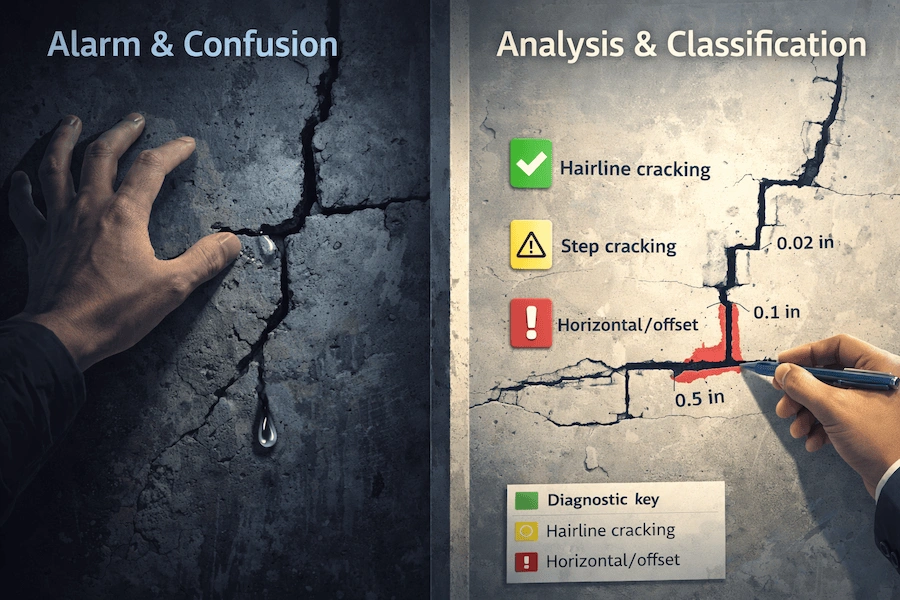
Seeing a crack in your home’s foundation or basement wall is unsettling. Your mind races: Is my house safe? Is this going to be incredibly expensive? Should I panic?
First, take a deep breath. Not every crack is a structural emergency. However, in Montreal, where our unique geology and climate put constant stress on foundations, knowing the difference between a cosmetic flaw and a serious warning sign is crucial.
As a structural engineer serving Montreal homeowners, I inspect hundreds of cracks every year. This guide will help you understand what you’re looking at and when it’s time to call in a professional.
Why Montreal is Particularly Tough on Foundations
Before we look at cracks, it’s important to understand the forces at play:
Decoding the Crack: A Visual Guide
Here’s a simple breakdown of the most common crack types and what they typically mean.
1. Hairline Shrinkage Cracks (Usually Not Serious)
Action: Monitor. These are often cosmetic. Seal them with an appropriate hydraulic cement or epoxy to prevent water ingress, but they rarely indicate structural movement.
2. Vertical or Diagonal Cracks (Potentially Concerning)
Action: Monitor closely. Measure the width seasonally. If the crack is stable (not widening), it’s often a maintenance issue. If it’s widening, especially if it’s stair-stepping through bricks or blocks, it indicates more active movement and requires professional assessment.
3. Horizontal Cracks (SERIOUS – Requires Immediate Attention)
Action: Contact a structural engineer immediately. This is a primary indicator of significant structural distress that can compromise the wall’s ability to hold back the earth.
4. Cracks with Displacement or Shearing (CRITICAL)
Action: This is a urgent structural issue. Seek a professional inspection without delay.
Your 3-Step Action Plan for Any Crack
1. Document It: Take a clear, well-lit photo. Place a coin or ruler next to it for scale. Use a simple crack monitor (available at hardware stores) or even mark the ends with pencil and date to track movement over months.
2. Investigate Surroundings: Look for other clues: Do doors or windows above the crack stick? Is the floor sloping? Is there water seepage or efflorescence (white, chalky residue) around the crack?
3. Decide to Monitor or Call: Based on the guide above:
Why a Structural Engineer, Not Just a Contractor?
A contractor’s goal is to fix. An engineer’s goal is to diagnose the root cause and prescribe the correct fix. Selling a repair without understanding the underlying soil, drainage, and structural forces is how homeowners end up with recurring problems. We provide an unbiased assessment and detailed specifications, ensuring any repair addresses the cause, not just the symptom.
Seeing a crack that worries you? You don’t have to figure it out alone.
If the crack appears serious or you simply want peace of mind, our comprehensive foundation inspection will give you a clear, professional understanding of your home’s structural health.