Solving the Mystery: A Step-by-Step Guide to Diagnosing Water in Your Basement
Discovering water in your basement is a sinking feeling—literally and emotionally. The immediate question is always: Where is it coming from, and how do I make it stop?
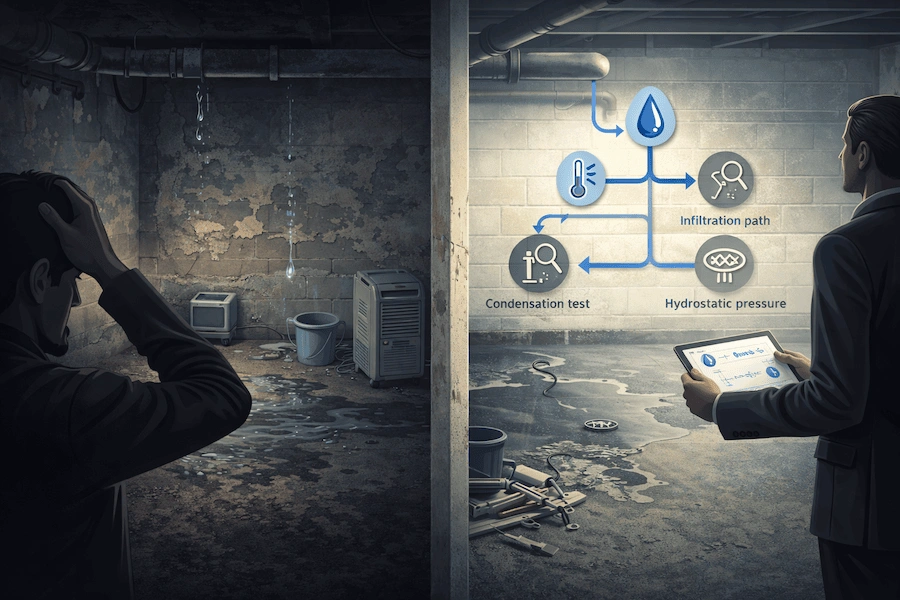
The critical mistake many Montreal homeowners make is jumping straight to a solution—like installing an interior drain—without correctly diagnosing the source. This can be a costly band-aid that fails to solve the real problem.
As structural engineers specializing in water infiltration investigations, we don't just look for water; we play detective to find its origin. This guide will give you a systematic, step-by-step method to diagnose the most common causes of basement water in our region.
The Three Major Culprits in Montreal
First, know your suspects:
1. Surface Water Infiltration: Water from rain or melting snow that isn't being directed away from your foundation.
2. Subsurface Water Infiltration (Hydrostatic Pressure): Groundwater rising and pressing against your foundation walls and floor.
3. Condensation: Moist, warm air hitting cool basement surfaces (walls, pipes) and turning to water droplets.
Mistaking condensation for infiltration (or vice versa) leads you down completely wrong—and expensive—repair paths.
Your Basement Detective Kit: Step-by-Step Diagnosis
Grab a flashlight, a piece of tape, and a notepad. Let's investigate.
Step 1: The "When & Where" Interrogation
When does it appear?
During/Immediately after heavy rain or spring thaw: Points strongly to surface or subsurface infiltration. The timing is the clue.
Constantly damp, musty, or worse in summer: Points strongly to high humidity and condensation.
Year-round, regardless of weather: Could be a high water table or a permanent leak (e.g., from a cracked sanitary pipe under the floor).
Where is it located?
Walls only, especially at joints or cracks: Likely wall infiltration from outside.
Floor-wall joint (the cove): Classic sign of hydrostatic pressure pushing water up from under the slab.
Floor only, in the middle: Could be a crack in the floor slab or, less commonly, condensation pooling.
On cold surfaces (pipes, ducts, AC units): Almost certainly condensation.
Step 2: The Visual Evidence Examination
Look closely at the water and the surface.
The Water Itself:
Clear and clean? Likely infiltration from rain/groundwater.
Rusty or soapy? Could indicate a leaking plumbing line.
The Surface:
Efflorescence: That white, chalky, powdery residue on concrete or brick. This is a smoking gun for infiltration. It's mineral salts left behind after water evaporates. It means water is moving through the wall.
Mold or Mildew: Can occur with both infiltration and condensation, but location gives a clue. Widespread mold on walls suggests chronic dampness from outside.
Staining: Brownish or yellowish tidemarks on walls indicate the height of past water infiltration.
Step 3: The Simple Condensation Test
This is the most important DIY test to rule out the simple (and cheaper) cause.
Dry a section of the damp wall or pipe thoroughly.
Tape a 12-inch square of aluminum foil tightly to the area, sealing all edges with tape.
Wait 24-48 hours.
Check the foil:
Water droplets on the OUTSIDE (room side) of the foil: You have condensation. The moisture is coming from your indoor air.
Water behind the foil (wall side), with the room side dry: You have infiltration. The moisture is coming from outside.
Connecting the Dots: Common Montreal Scenarios
When DIY Stops and Professional Help Begins
You can likely manage condensation with a dehumidifier, better ventilation, and insulating cold pipes.
However, you need a professional assessment for infiltration because:
Treating the symptom (the water inside) without curing the disease (the pressure or path outside) is a temporary fix at best.
Your Action Plan
Do the detective work using the steps above:
Tired of the damp, the mystery, and the worry?
Our water infiltration investigations are forensic. We don't guess—we diagnose. Using methodical observation and advanced tools, we'll pinpoint the source of your basement water and provide a clear, engineered solution to stop it for good.
Not sure what you're dealing with? Send us your photos, description of "when & where," and we'll provide initial guidance on the likely culprit.