The Ultimate Guide to Quebec's Mandatory Building Facade Inspection - Bill 122
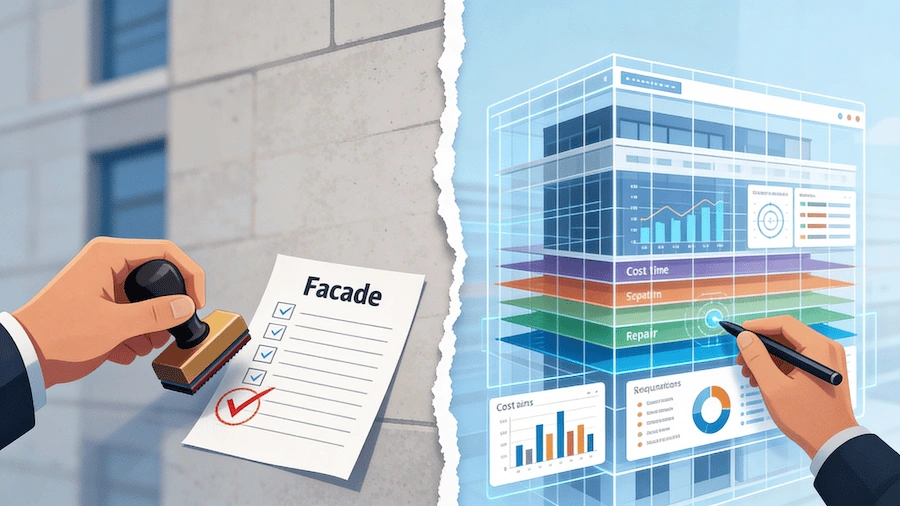
Transform this obligation from a source of stress into your most powerful tool for long-term capital planning, risk mitigation, and asset preservation.
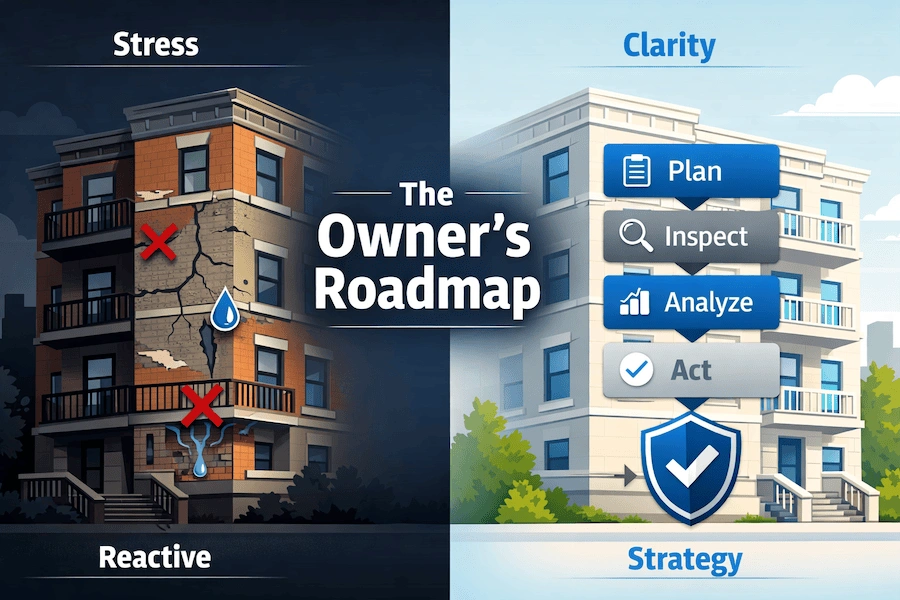
The Owner's Roadmap: Navigating Quebec's Mandatory Building Envelope Inspection
If you manage a building in Quebec with five storeys or more, you are legally required to have its exterior envelope inspected every five years under the Building Act (Bill 122). For many property managers and condo boards, this process feels daunting—a maze of regulations, technical jargon, and high-stakes financial decisions.
This guide is your roadmap. We've broken down the entire journey into four essential steps, each detailed in a dedicated section. Our goal is to transform this obligation from a source of stress into your most powerful tool for long-term capital planning, risk mitigation, and asset preservation.
Why This Inspection is Your Secret Weapon for Financial Planning
Most see it as a cost. Savvy building stewards see it as a strategic investment. A proper inspection is the only way to get an objective, forensic analysis of your building's largest and most valuable asset: its exterior shell. It replaces guesswork with data, allowing you to budget accurately and prioritize repairs that truly protect your investment.
The 4 Essential Stages of a Successful Inspection
Stage 1: Preparation & Planning
Don't wait until the last minute. A successful inspection requires careful planning:
Key Takeaway: Starting early is the single biggest factor in controlling costs and reducing stress.
Stage 2: Selecting Your Engineering Partner
Not all inspectors are equal. Choosing based on price alone can lead to a superficial report that misses critical defects, costing you exponentially more later. Ask the right questions to vet potential firms, ensuring you hire a true expert who will provide a defendable, actionable report. Questions cover expertise, methodology, insurance, and deliverables.
Key Takeaway: Your inspector is your advocate. Hire for rigor and clarity, not just the lowest fee.
Stage 3: Understanding the Findings
Receiving a thick technical report can be overwhelming. Translate engineering jargon into clear, actionable intelligence. Learn what each deficiency classification truly means for safety, water intrusion risk, and repair urgency. We show you how to interpret the findings to make informed decisions, not reactive panicked ones.
Key Takeaway: A good report is a diagnostic tool, not just a list of problems. Understanding it is key to planning.
Stage 4: From Report to Action Plan
The report is the beginning, not the end:
Key Takeaway: A strategic, phased approach based on the report protects your financial health and your building's longevity.
Why Montreal Buildings Need Special Attention
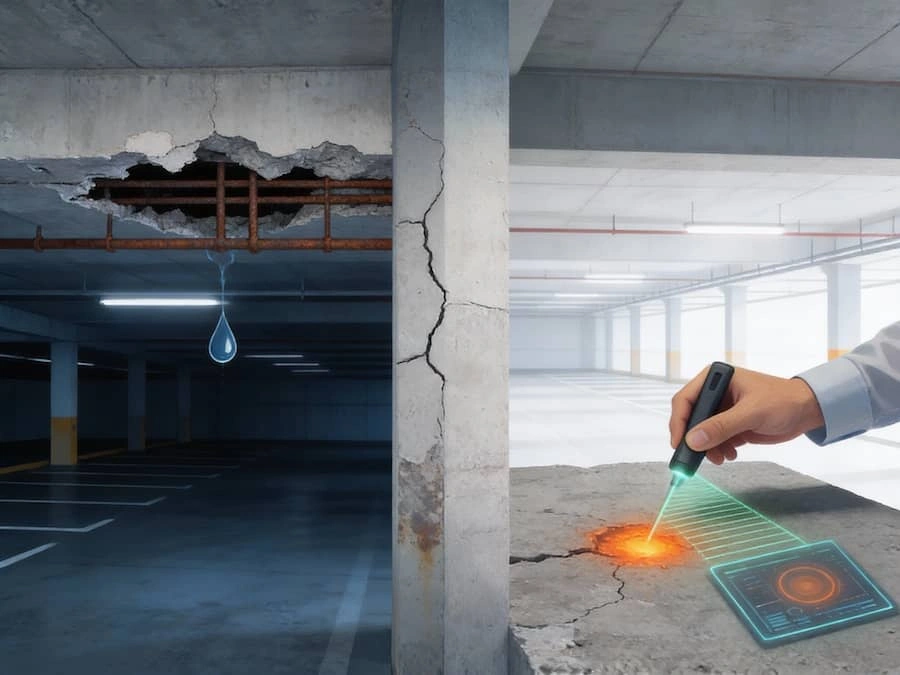
Our climate is your building's greatest adversary. The relentless freeze-thaw cycle, driving rain, and use of road salt uniquely attack our facades, balconies, and parapets. A Montreal-specific inspection doesn't just look for problems; it looks for the problems caused by our environment. We consistently find:
Ready to Begin Your Inspection Journey with Confidence?
Navigating this mandatory process doesn't have to be a burden. With the right preparation and partner, it becomes a cornerstone of responsible property management.
We guide Montreal building owners through every stage of the mandatory inspection process—from initial consultation and rigorous on-site assessment to clear reporting and strategic repair planning. Our goal is to provide not just compliance, but clarity and control over your building's future.
Have a specific question or an upcoming deadline? Speak directly with one of our engineers.